Turning Blog Content Into an eBook: What Makes the Transition Work
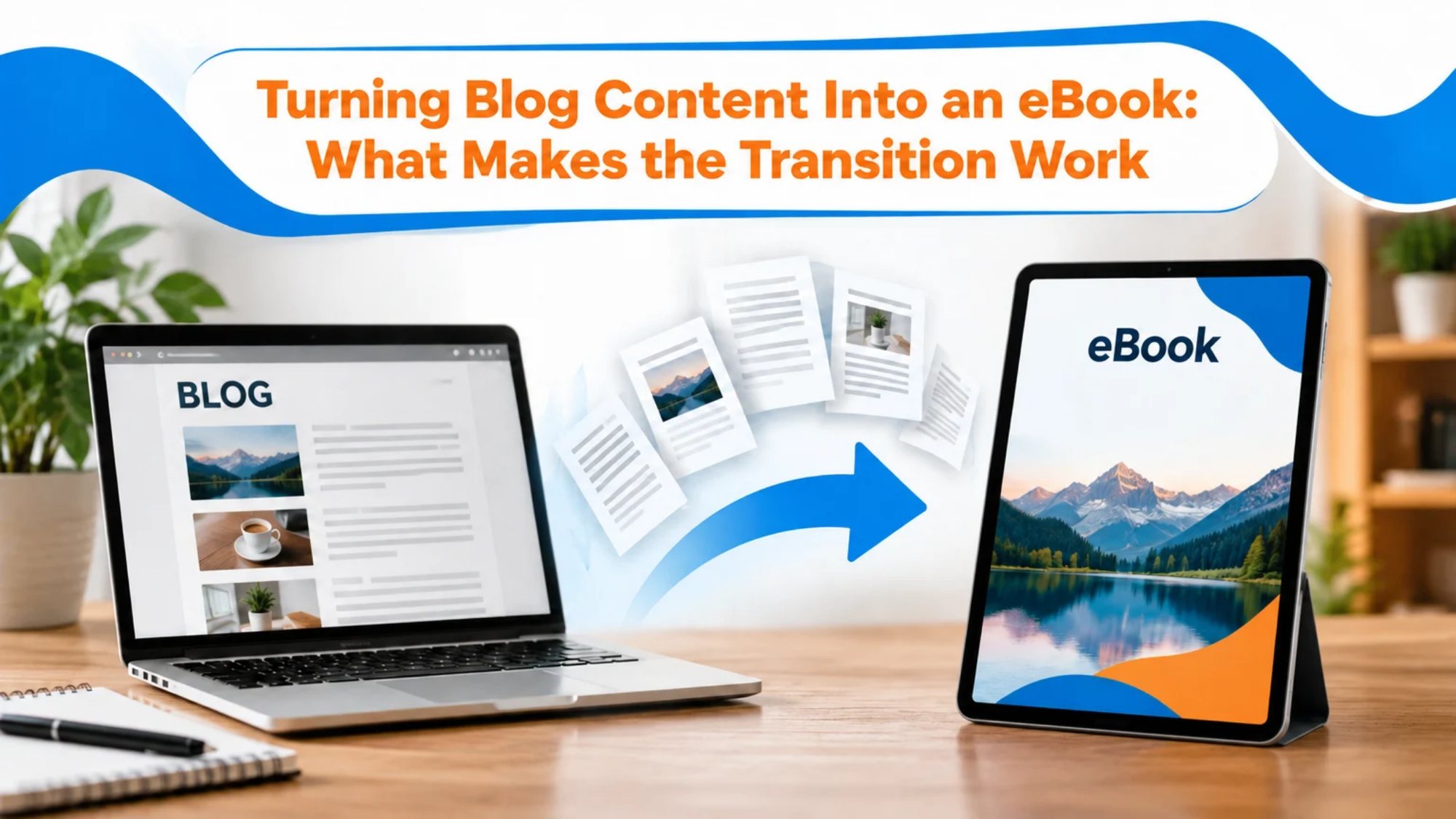
You may have dozens of useful blog posts published on your website, but their value doesn't have to end there. A collection of related posts can be turned into a useful ebook that gives readers more information in one convenient place.
However, simply copying and pasting several articles into a document rarely produces a strong result. Reliable ebook conversion services can help transform existing blog content into a well-organized resource. The difficult part isn't collecting the posts. It's deciding what belongs together, filling the gaps, and making the finished ebook read like it was written as a single publication. This blog explains how to turn existing blog content into an ebook and the best practices that can make the transition successful.
Why Convert a Blog to an eBook?
Creating an ebook from scratch can take a lot of time. You need to research the topic, organize the information, write chapters, edit the content, and prepare the final document for publishing. If you already have blog posts on your website, then you have a head start on blog-to-ebook conversion.
Each blog post can be thought of as a section of a book and can be modified accordingly. To create an ebook, you need to merge sections or add more information to each section.
This approach is also valuable for ebook readers and blog readers because several related articles can become one comprehensive resource.
A detailed ebook can give older blog content a new purpose while helping readers who prefer to have all the relevant information in one place.
How Blog-to-eBook Conversion Actually Works
Turning your old blog posts into an ebook is not as simple as putting several articles into one document. The content needs to be reorganized, edited, formatted, and tested so it feels like one complete publication rather than a collection of separate web pages.
Planning The Content
The first step is to review existing blog content as a whole. Some posts may cover closely related subjects, while others partially fit the intended ebook topic. Reviewing them together helps identify which articles can form a logical reading sequence.
Start by choosing a clear theme for the ebook. The chosen posts should support that theme and provide useful information without taking the reader far from the topic. It is also important to check whether there is enough useful material to create a complete ebook.
If important areas are missing, new content may need to be written instead of forcing unrelated posts into the book.
This planning stage also helps reveal content gaps. For example, several blog posts may explain individual aspects of the subjects, but fail to provide an introduction, background information, or a clear conclusion. Identifying these gaps early makes the editing process much easier.
Restructuring The Content
Once the source material has been selected, the next challenge is making it read like a book. Blog posts are usually written as standalone pieces. They may repeat basic definitions, introduce the same topic several times, or refer readers to another article for additional information. Those approaches can work well on a website, but they can make an ebook feel repetitive and disconnected.
When restructuring ebook content, combine or remove repeated explanations. Sections should be arranged in an order that makes sense to readers reading from the beginning to the end. Transitions can then be added to connect one chapter to the next.
Some blog-specific language also needs rewriting. Generalized phrases such as “as we discussed in our previous post” or “read our other article” can interrupt the flow of an ebook.
Instead, the necessary information should be incorporated directly into the relevant section.
The ebook also benefits from elements that individual blog posts do not normally need, such as an introduction, key takeaway, chapter summaries, and a conclusion. These additions give the publication a stronger sense of structure and help readers understand how each section contributes to the larger topic.
Handling Technical Formatting Phase
Once the content has been organized, it needs to be prepared for the chosen ebook format.
The format depends on how the publication will be used. For example, EPUB is commonly used for flexible, reflowable reading, while PDF is useful when preserving a specific page design is important. Kindle publications also require formatting that works properly across compatible devices and apps.
Consistency is important throughout the ebook. Headings, fonts, spacing, images, captions, and other visual elements should follow a common style.
Images should be checked for suitable resolution and sizing. Tables require particular attention because they may look fine on a desktop but become difficult to read on a smartphone or smaller e-reader.
Navigation should also be easy to use. A properly structured table of contents, internal links, and clear chapter headings help readers move through the ebook without frustration.
Validate the Final eBook
The final ebook needs more than a basic spelling check. Its content and technical elements should both be reviewed before publication. Dates, statistics, references, and other time-sensitive information should be checked for accuracy. External links should also be tested to make sure they still work.
Terminology should remain consistent throughout the ebook. Images, tables, headings, and other elements should be reviewed to ensure they appear correctly.
The finished file should also be tested on different devices and screen sizes. This can reveal problems that may not be visible when reviewing the ebook on a single computer.
What Makes Blog-to-eBook Conversion Harder Than It Looks?
The main challenge is that existing blog content was not created to function as a book. Each article may have been written at a different time, for a different audience, or with a different purpose.
Different Writing Styles
The blog posts were written over several months or years and can have noticeable differences in terminology, tone, depth, and sentence formation. One article may be conversational, while another may be more technical.
When these articles appear together, the differences can make the ebook feel inconsistent. Editing is needed to create a smoother experience while keeping the original value of the content.
Missing Context
A blog post can assume that readers already understand the subject, or can easily visit another page for additional information. An ebook cannot always rely on that approach. Readers can follow the subject without constantly wondering what information they missed.
Some sections may therefore require additional context, while other sections may need to be shortened or moved.
Formatting Problems
Web content does not always transfer smoothly into an ebook. Links, images, tables, and spacing may behave differently depending on the device and format. For instance, a table that looks perfect on a desktop screen may extend beyond the display on a phone. Similarly, any image may appear too large or become poorly positioned after conversion.
Device Testing
Readers may use smartphones, tablets, Kindle devices, computers, or other ebook applications. Screen sizes and display settings vary, particularly with reflowable formats.
Testing the ebook in different environments helps identify layout and navigation problems before readers encounter them.
Hidden Errors
Small technical problems can easily remain unnoticed after a normal review. A table of contents may point to the wrong chapter, an internal link may not work, or an image may fail to display correctly. These issues can affect the reader’s experience and can make the ebook appear less polished. A systematic check is therefore essential.
How Professionals Handle Blog-to-eBook Conversion
The complexity of the process is one reason businesses often use professional ebook conversion services.
Content Expertise
Professionals can evaluate multiple blog posts and determine how to organize them into chapters. They can remove repetition, improve transitions, fill structural gaps, and create a logical reading sequence.
Technical Knowledge
Different eBook formats have different requirements. Professionals understand how to prepare content for PDF, EPUB, Kindle, and other formats while maintaining readable layouts and proper page navigation.
Quality Control
Professional workflows typically include overall content reviews, link verification, formatting checks, navigation testing and final validation. These steps help identify errors before the ebook reaches readers.
Cross-Device Testing
A file that looks perfect on a desktop may behave differently on a phone or e-reader. Testing across several reading environments helps catch those issues before publication.
Better Use Of Time
Learning ebook formatting while managing content editing can take considerable time.
Experienced professionals already understand common conversion problems and have established processes for solving them.
Make Your Existing Content Reach Targeted Readers With eBooks
Converting a blog copy into an ebook is not copy-paste work. It requires handling existing technical complexity, restructuring content, and validating across devices.
A well-planned professional workflow can help prevent formatting and navigation issues that may affect the reading experience.
For blogs with valuable content worth extending beyond the web, a professional ebook formatting service handles both the editorial work and technical expertise that make the difference between a compiled collection and a polished, professional ebook.
